Bedding · Practical guide
What to Check Before Adding a Mattress Comfort Layer
A mattress topper can change the feel of a bed without replacing the mattress beneath it. But a comfortable result depends on more than softness: dimensions, mattress depth, materials, construction and care all matter. Take a careful measure before choosing, and the new layer is more likely to sit smoothly, stay in place and suit the way you sleep.
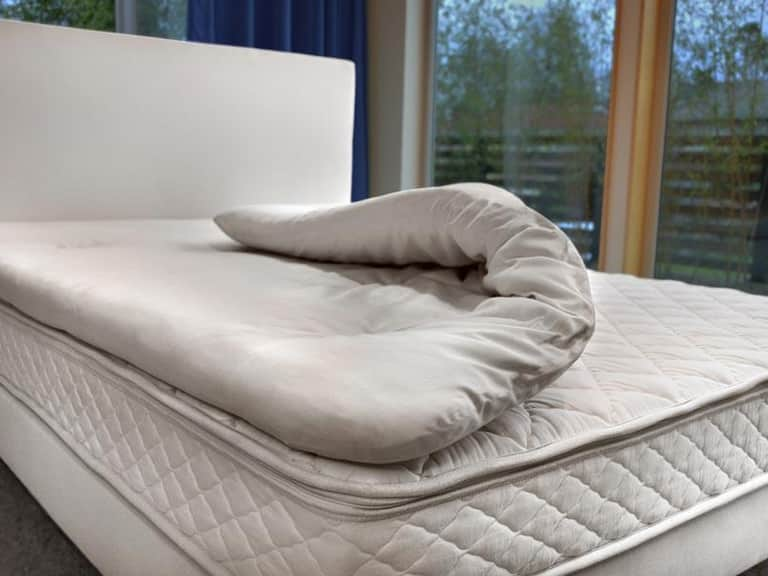
A bed is a small landscape of layers. At the bottom is the foundation; above it, a mattress built from foam, springs, fibers or a combination of materials. Sheets and blankets finish the surface. A mattress comfort layer—often called a topper—sits between mattress and sheet, changing the feel of that landscape while leaving its basic structure intact.
That distinction is useful. A topper may add cushioning to a firm surface, create a softer contact layer or provide a modest change in warmth and texture. It is not a universal remedy for a mattress that is sagging, damaged or otherwise no longer supportive. Before adding one, look at the bed as a system: its measurements, its existing condition, its sheets and protectors, and the everyday habits that determine how the bedding will be cared for.
The details can be easy to overlook. A layer only an inch thick can affect a fitted sheet’s grip; a deeper one can noticeably raise the bed. Wool, latex and quilted wool constructions do not feel or behave identically, and their cleaning instructions can differ sharply. A few checks now can prevent a topper from sliding, bunching or becoming a maintenance burden later.
Begin with the mattress, not the product listing
Start by measuring the mattress itself. Bedding labels commonly use familiar size names—twin, full, queen or king—but names are not a substitute for dimensions. Measure the mattress’s width and length with a tape, keeping it straight across the center. If the mattress is an unusual size, has rounded corners or is part of a split arrangement, record those details too.
Next, measure the mattress depth. Place the tape at the bottom edge and measure vertically to the highest point of the sleeping surface, without pressing down into the padding. If the mattress has a built-in pillow top or another raised surface, include it. It is the full height that the fitted sheet must contain, not simply the height of the mattress’s core.
Then check the dimensions of the topper, not just its named size. Product dimensions can vary between manufacturers, and a close match is especially important when the layer is designed to fit snugly beneath a fitted sheet. A topper that is too small can leave exposed edges; one that is too large may fold, overhang or resist lying flat. For a child’s mattress or another non-standard bed, exact measurements are particularly helpful.
Account for every layer that will be on the bed
A topper adds height, and that extra height travels upward through the bedding. The fitted sheet has to stretch over the combined depth of the mattress and comfort layer. If you also use a mattress protector, include its thickness in your planning. The elastic edge of a sheet that once fitted securely may become taut, pull free at the corners or creep during the night when asked to cover a taller stack.
Check the sheet’s stated pocket depth, when available, and compare it with the total height of the layers it needs to cover. A little extra capacity can help the sheet stay in place, but a very loose fit can also encourage wrinkles. If the topper has thickly padded edges or the mattress is already deep, test the combination rather than assuming a familiar sheet will work.
Consider the whole bed’s height as well. A thicker layer can make getting in and out feel different, especially for people who prefer a lower bed or use a frame with a tall base. It may affect the appearance of the bed, the reach of a bedside table or the way a blanket falls over the sides. These are practical rather than technical questions, but they shape whether a new layer fits daily life.
Match the layer to the change you want
Before comparing materials, put the desired change into plain language. Is the mattress too firm at the surface? Is the aim to introduce a more yielding feel, to add a little loft, or to make the surface feel warmer and more textile-like? A clear goal helps distinguish a cushioning layer from a protective pad or a thick construction intended to create a more substantial change.
Expectations matter. A topper changes the feel of the surface; it does not repair a damaged mattress or reliably correct a structural problem. It may alter how pressure is distributed at the contact surface, but comfort is personal and depends on body shape, sleep position, mattress condition and preference. There is no single thickness or material that suits everyone.
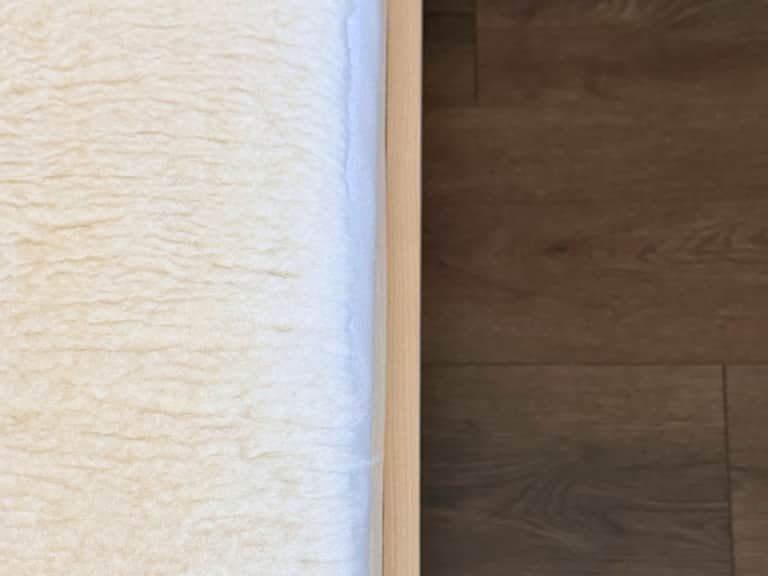
Think, too, about how much change you want. A flexible wool fleece layer around an inch deep, such as Happy Lamb Fleece, offers a different kind of addition from a quilted wool topper or a deeper latex-and-wool construction. The product description lists an approximately one-inch depth and a wool surface on organic cotton knit backing. Its profile may be relevant when the goal is a relatively modest surface adjustment rather than a much thicker build-up.
At the other end of the spectrum, the Organic Latex Topper – 3" is described as approximately three inches thick, combining a two-inch latex core with wool and an organic cotton sateen cover. That is a more substantial layer, so mattress depth, sheet pocket capacity and the desired amount of change deserve close attention. Its materials and construction are not interchangeable with a thin fleece or a quilted wool pad.
Understand the materials beneath the fabric
The word “topper” describes where an item goes, not what it is made of or how it feels. Wool-filled quilted toppers, wool fleece and latex toppers use different structures. The shell, fill, thickness and method of securing the materials all contribute to the finished surface.
Wool fibers have a naturally crimped structure that can hold air, and wool textiles are often valued for breathability and moisture management. Those characteristics do not guarantee that every sleeper will feel cool, warm or comfortable in the same way. Room temperature, bedding layers, the sleeper and the construction of the individual product all influence the experience. Use performance descriptions as a guide, not a promise of a particular night’s sleep.
Latex behaves differently from loose or quilted fiber fill. In a product such as the three-inch Organic Latex Topper, the latex forms the central cushioning layer, while wool and cotton make up surrounding materials. Check the product’s stated latex type, thickness and firmness information where supplied. A heavier or more responsive construction can feel quite different from a soft, flexible textile layer, even when both include wool.
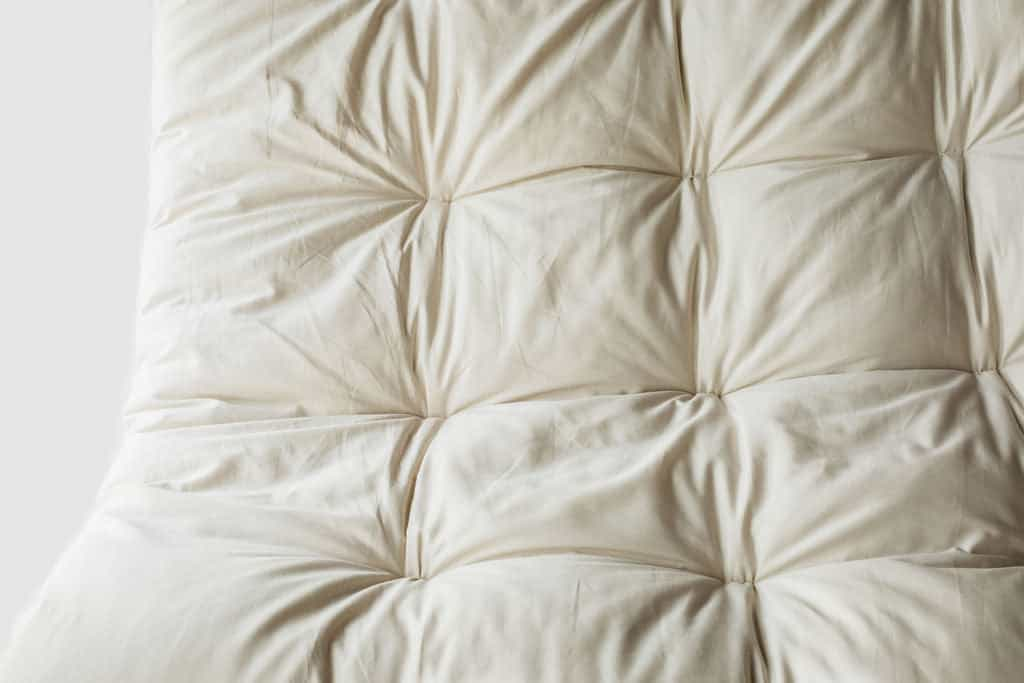
Quilting and tufting are also worth examining. Stitching, hand-tufting or quilting can help keep fill distributed within a cover, while straps, elastic or corner ties may help attach a topper or secure another bedding layer. Construction details offer clues about how the item is assembled, but they do not remove the need to follow care instructions or to check fit on the actual bed.
Read the care label before choosing
Care requirements are not a footnote. They are part of the product’s everyday function. Some toppers are designed for spot cleaning and occasional airing; some smaller versions may have limited washing instructions; others may tolerate a carefully controlled wash. Never assume that a natural fiber is machine washable simply because another wool item in the house can be washed.
For example, the All-Natural Quilted Topper is described as a wool-filled, organic-cotton-covered layer. Its care information distinguishes the main topper sizes, which are not machine washable and should be spot-cleaned, from crib toppers, for which restricted cold-water washing may be permitted in the event of a large spill. That is a meaningful difference: the instructions for one size or version should not automatically be applied to another.
Some wool constructions are vulnerable to agitation, excess heat or inappropriate drying. These conditions can cause shrinkage, distortion, felting or clumping. If washing is permitted, follow the exact instructions about temperature, cycle, detergent and drying. If a care guide specifies soak and spin only, that is not the same as a regular wash cycle. If instructions are unclear, ask the seller or manufacturer before cleaning.
Spot cleaning can be less disruptive than washing the entire item. Blot a spill rather than rubbing it deeper into the fibers, and use only a cleaning method allowed by the product’s instructions. Allow the topper to dry completely before putting it back on the bed. Damp bedding trapped beneath a sheet can hold unwanted moisture and odors.
Plan for protection and regular upkeep
A removable protector or fitted sheet can help reduce direct contact with spills, skin oils and routine dust. But protection needs to be compatible with the new layer. A tightly fitted protector may not accommodate the combined depth of mattress and topper, while a loose one may move. Measure the full stack and check the protector’s pocket depth, fit and material before relying on it.
Air bedding when practical, following any product-specific advice. Some wool items may be refreshed by airing or carefully placed in sunlight, but direct sun or heat is not appropriate for every fabric or construction. Follow the maker’s guidance rather than treating all wool as if it had the same tolerance. A naturally scented wool product may have a noticeable fiber smell when new; ventilation can help, but check the manufacturer’s advice if a scent persists or causes concern.
Routine maintenance should be realistic. If the topper’s care instructions call for spot cleaning, sunning or professional cleaning, consider whether those steps suit your household. A surface that is easy to protect and maintain may be a better fit than one that offers a preferred feel but requires care that is difficult to provide.
Consider certification and sourcing carefully
Material descriptions can help clarify what is inside a topper and where components come from. Look for specific information about the fill, cover, processing and origin. Words such as “natural,” “organic” and “sustainable” can be broad, so it is useful to see whether the claim is linked to an identified material, a named standard or a clearly described supply chain.
When a product lists a certification, check what that certification applies to. A standard may cover a particular fiber, fabric or stage of processing rather than every component of a finished item. For example, a description of an organic cotton cover does not, on its own, establish that the filling is certified organic. A careful materials list can make that distinction clearer.
Certifications may help readers compare products, but they do not answer every practical question. A certified topper still needs the correct dimensions, suitable thickness, a comfortable feel and care instructions that work for its owner. Evaluate sourcing information alongside construction and fit, not instead of them.
A short compatibility checklist
Before placing an order, review the bed and the product together. A few minutes with a tape measure and the product’s full description can prevent avoidable mismatches.
- Measure the mattress: record its width, length and full depth, including a raised top.
- Check the topper dimensions: compare exact measurements, especially for non-standard beds.
- Calculate total height: add the topper and any protector to the mattress depth.
- Confirm sheet fit: check pocket depth and consider whether the elastic can cover the complete bedding stack.
- Set a comfort goal: decide whether you want modest surface softness, a textile layer or a more substantial cushioning change.
- Compare construction: note thickness, fill, shell and any straps, quilting or tufting.
- Read care directions: verify what can be washed, what must be spot-cleaned and how the item should dry.
- Review material claims: distinguish the materials in the cover from those in the filling and check the scope of any certification.
When a topper may not be the answer
If a mattress has a pronounced dip, broken support or a surface that has deteriorated, adding a comfort layer may disguise the problem without correcting it. A topper is designed to adjust the surface experience, not to restore the mattress’s underlying structure. Check the mattress’s condition and any applicable warranty before deciding that another layer is the right intervention.
It is also worth considering whether the bed’s existing layers are causing the difficulty. A thick protector, multiple pads or an ill-fitting sheet can create bunching and unevenness that may be mistaken for a mattress problem. Removing or adjusting an unnecessary layer may be simpler than adding another one.
Choose for the bed you actually have
The best mattress comfort layer is not necessarily the thickest, the softest or the one with the longest list of natural materials. It is the one that fits the mattress, supports the change in feel you are seeking and can be maintained according to its instructions. A breathable wool fleece, a quilted wool topper and a deeper latex-and-wool design each create a different combination of height, texture and cushioning.
Begin with measurements. Account for the fitted sheet and protector. Decide how much surface change is appropriate, then compare the topper’s fill, cover, construction and care requirements. These steps make the choice less like guesswork and more like careful fieldwork: observe the bed as it is, understand the materials being added and consider how the new layer will live in the room through ordinary use.
Once the dimensions and care are clear, comfort becomes easier to evaluate. The aim is not to build the most complicated bed, but to create a surface that feels right, stays in place and fits the routines of the people who sleep there.